
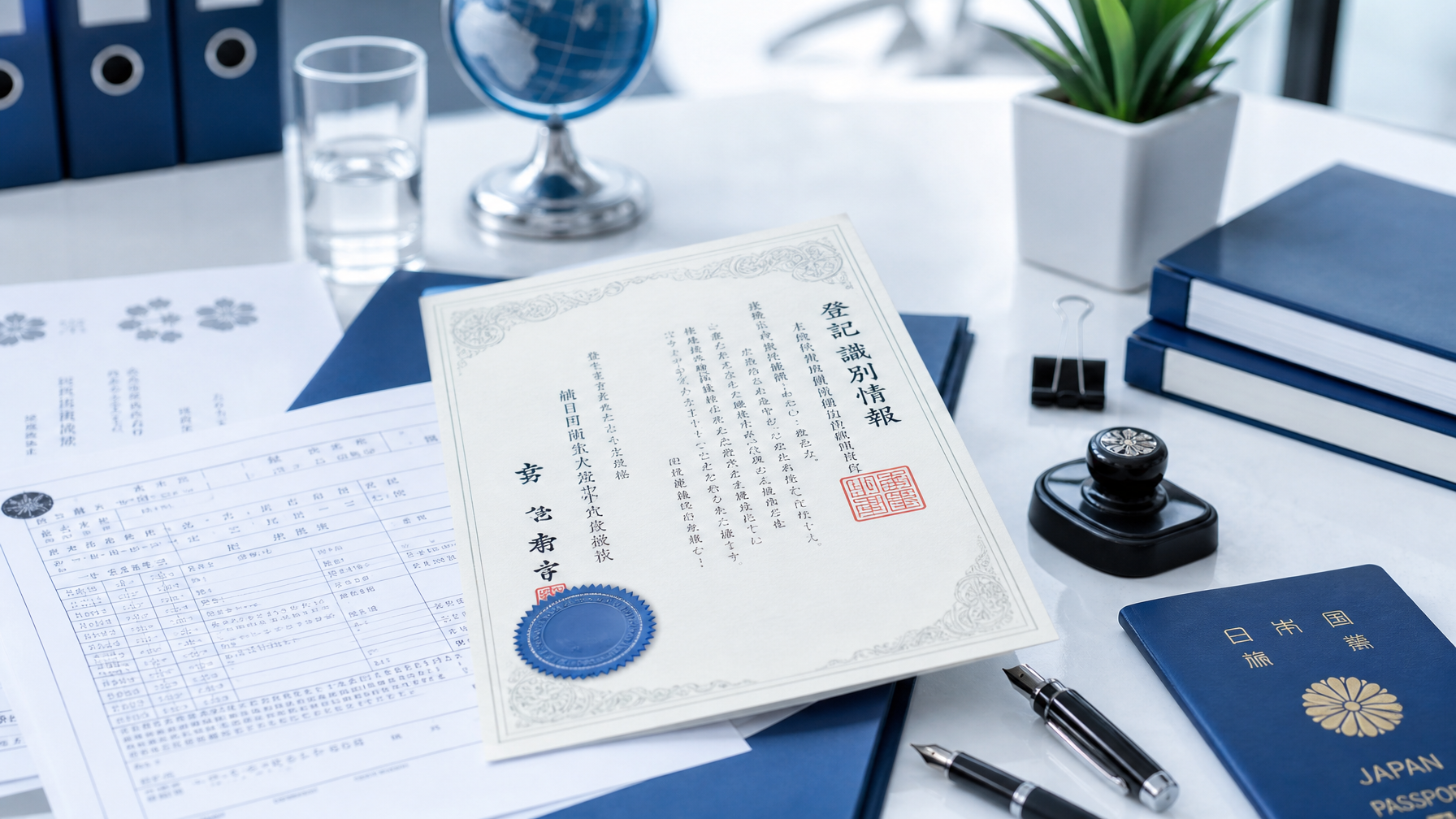
Certified Japanese Translation in the UK: Documents, Requirements, and What to Expect
Key Takeaways
- Certified Japanese translation is required for any Japanese-language document submitted to a UK official body, court, visa authority, or regulated institution.
- A certified translation includes a signed statement from the translator or agency confirming accuracy and completeness. It is not the same as a notarised translation.
- Common Japanese documents requiring certified translation in the UK include birth certificates, marriage certificates, academic transcripts, company documents, and court records.
- UKVI does not maintain an approved list of translation agencies but requires that translations be produced by a professional. Family members and bilingual individuals are not acceptable.
- Certified Japanese translations from Global LTS are accepted by the Home Office, UKVI, HM Passport Office, and other UK official bodies.
Certified Japanese translation is one of the most frequently requested translation services for individuals and businesses with connections between the UK and Japan. Whether you are applying for a UK visa, submitting documents to a UK court, registering a Japanese company in the UK, or providing Japanese educational credentials to a UK employer or institution, a certified translation is likely to be required.
Table of Contents
ToggleThis guide explains what certified Japanese translation means, which documents commonly require it, and what the process looks like.
What Is a Certified Japanese Translation?
A certified translation is a translation accompanied by a signed statement from the translator or translation agency confirming that the translation is accurate, complete, and a true representation of the original document.
The certification statement must include:
- The full translation of the original document
- A statement that the translation is accurate and complete to the best of the translator's knowledge
- The translator's full name and contact details
- The date of the translation
Certified translation is not the same as notarised translation. Notarisation involves a notary public witnessing and stamping the translator's signature, which is required for some consular and legal purposes but is not the standard requirement for UK immigration or official applications. When a UK body asks for a "certified translation," it means the translator's own signed certification, not a notary stamp, unless specifically stated otherwise.
Japanese Documents Commonly Requiring Certified Translation in the UK
Birth certificates (出生証明書 / 戸籍謄本)
Japanese birth documentation comes in several forms. A birth certificate in the Western sense (出生証明書) is issued by hospitals. A family register extract (戸籍謄本, koseki tohon) is the main official record of birth, family relationships, and personal status in Japan, and is the document most commonly requested by UK bodies for nationality, inheritance, and family visa purposes. The koseki contains information about the entire family unit and must be translated in full, including all relationships and dates recorded.
Marriage certificates (婚姻届受理証明書 / 戸籍謄本)
Marriage in Japan is recorded in the koseki rather than on a separate marriage certificate. A koseki extract showing the marriage entry, or a marriage registration acceptance certificate (婚姻届受理証明書), is the document used to demonstrate marital status. Both forms require certified translation for UK spouse and partner visa applications, civil registration, and legal proceedings.
Academic transcripts and diplomas (学位証明書 / 成績証明書)
Japanese universities and schools issue academic records in Japanese. These are required for professional qualification recognition, skilled worker visa applications, and admission to UK educational institutions. Japanese academic documents include grading scales, course titles, and credit systems that differ from UK equivalents and require a translator with knowledge of the Japanese education system to translate accurately.
Company documents
Japanese company registration documents (登記事項証明書) from the Legal Affairs Bureau, articles of incorporation, and company certificates are required for UK commercial registrations, banking, regulatory applications, and due diligence. These documents contain specific corporate and legal terminology that requires a translator with commercial or legal expertise.
Court records and legal documents
Japanese court judgments, notarial deeds, power of attorney documents, and criminal records (犯罪経歴証明書) require certified translation for UK court proceedings, probate applications, and criminal records disclosures.
Medical records
Japanese medical records, discharge summaries, and specialist reports require certified translation for UK medical registration, insurance claims, and legal proceedings.
UKVI Requirements for Japanese Translation
UK Visas and Immigration requires that any document submitted in Japanese must be accompanied by a full English translation. The translation must be:
- A complete translation of the entire document, including stamps, official markings, and any handwritten annotations
- Certified as accurate by a professional translator or translation agency
- Accompanied by the translator's signed statement with their name and contact details
UKVI does not maintain a list of approved translators or agencies. The requirement is that the translation be produced by a professional. Family members, friends, and bilingual individuals cannot certify a translation for official immigration purposes regardless of their language ability.
Machine-translated documents are not accepted. The certification must come from a human professional.
Challenges Specific to Japanese Certified Translation
Three writing systems. Japanese documents contain kanji, hiragana, and katakana, and may also contain romaji (Roman script) for certain proper nouns or official references. A certified translation must cover all scripts accurately, including handwritten elements where present.
The koseki format. The family register is a uniquely Japanese document with no direct UK equivalent. Its structure, which records multiple generations and family relationships, can be unfamiliar to UK document reviewers. A well-produced certified translation presents the information clearly in English while accurately reflecting the original structure.
Name transliteration. Japanese names can be transliterated into Roman script in different ways, and the official romanisation used on a Japanese passport may differ from the romanisation used informally or in previous documents. A certified translator must use the established romanisation consistently and flag any discrepancy between documents to avoid inconsistencies in an application.
Seals and stamps. Official Japanese documents often carry red ink seals (hanko or inkan) from issuing authorities. These must be identified and translated in the certified translation, as they form part of the official document record.
How Long Does Certified Japanese Translation Take?
A standard certified translation of a single document such as a birth certificate extract or marriage record typically takes two to three working days. Koseki extracts covering multiple family members or multiple generations take longer due to their complexity. Urgent turnaround is available on request.
Global LTS provides certified Japanese translation for UK visa applications, official submissions, legal proceedings, and commercial purposes. Our translations are accepted by UKVI, the Home Office, HM Passport Office, UK courts, and other official bodies.
Each certified translation includes a signed statement of accuracy with the translator's name and contact details. Contact us with your documents for a free quote. See our Japanese translation services and certified translation services pages for more information.