
UK Food Labeling Translation: What Exporters Need to Know
Key Takeaways
- UK food and drink exporters selling into EU member states must provide product labels in the official language of each destination country under the EU Food Information to Consumers Regulation (EU FIC 1169/2011).
- Mandatory label elements including ingredient lists, allergen declarations, nutritional values, and storage instructions must all be translated. Omitting any statutory element can result in product rejection at EU customs, trading standards enforcement, or product recall.
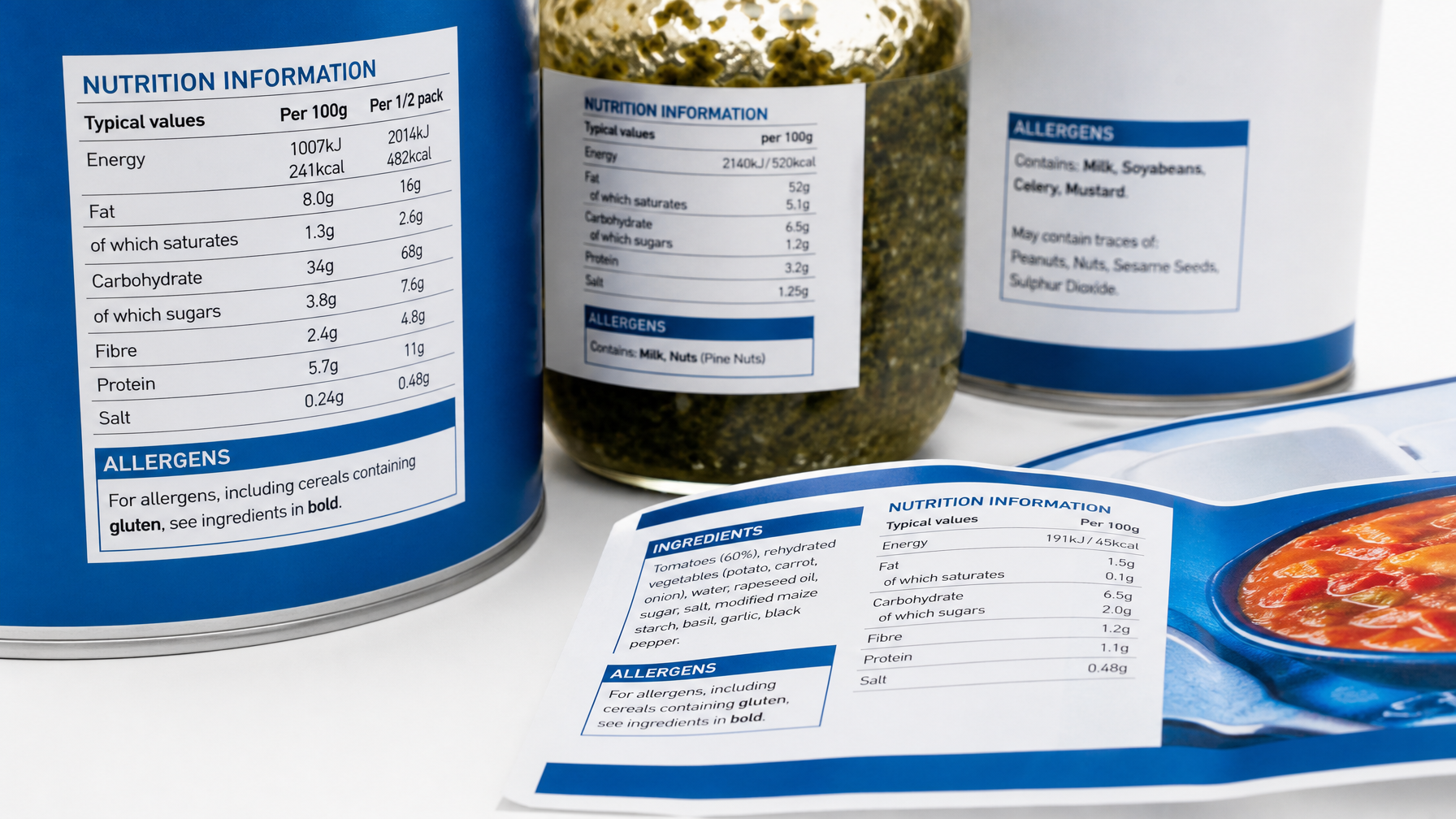
- Allergen translation carries particular risk. The 14 major allergens defined under EU FIC must be clearly emphasised (typically in bold) in the translated ingredients list. A missed or mistranslated allergen declaration is a direct consumer safety issue.
- Nutritional information tables follow a standardized EU format but require precise translation of unit labels, daily reference value percentages, and nutrient names to comply with layout regulations.
- Working with ISO 17100:2015 certified food translation specialists ensures that statutory label terminology aligns precisely with the legal wording required in each target country.
For UK food and drink manufacturers exporting to European and international markets, product labeling translation is not optional. It is a legal requirement under food safety legislation in virtually every territory, and the consequences of non-compliance extend well beyond fines.
Table of Contents
ToggleInaccurate allergen declarations create direct public health risks. Incorrect nutritional labeling undermines consumer trust. Missing mandatory label elements can trigger customs rejections and product recalls that destroy both revenue and brand reputation in a new market.
This guide walks through the key legal requirements UK food exporters must understand before translating their product labels for international distribution.
The Legal Framework: EU FIC Regulation 1169/2011
The primary legislation governing food labeling in the European Union is Regulation (EU) No 1169/2011 on the provision of food information to consumers, commonly known as the EU FIC Regulation. It applies to all food products sold to consumers and caterers across EU member states.
Under EU FIC, food labels must be provided in a language easily understood by consumers in the country where the product is sold. In practice, this means the official national language of each destination market. A UK food brand exporting to Germany, France, Spain, and the Netherlands simultaneously needs four separate translated label versions.
Post-Brexit, UK food exporters no longer benefit from automatic regulatory alignment with EU standards. The UK Government's own food labeling rules now diverge slightly from EU FIC in specific areas. Businesses exporting into the EU must comply with EU FIC requirements for EU-destined stock, regardless of UK domestic labeling rules.
Mandatory Label Elements That Must Be Translated
Under EU FIC, the following elements are legally required and must appear in the official language of the destination country:
1. Product Name
The legal or customary name of the food product must be translated accurately. Where the product name is a protected designation of origin (PDO) or protected geographical indication (PGI), specific rules apply regarding how the name may appear in translation.
2. Ingredients List
The full ingredients list must be translated in descending order of weight. Ingredient names must correspond to the standardized terminology used in the destination country's food regulations, not simply a direct word-for-word translation of English ingredient names.
3. Allergen Declarations
The 14 major allergens defined under EU FIC (including cereals containing gluten, crustaceans, eggs, fish, peanuts, soybeans, milk, nuts, celery, mustard, sesame, sulphur dioxide and sulphites, lupin, and molluscs) must be:
- Listed within the ingredients list.
- Visually emphasised through typographic distinction, typically bold text.
- Named using the precise statutory allergen terminology for the target language.
Mistranslating an allergen name, using a colloquial synonym, or failing to emphasise it correctly constitutes a regulatory violation and a direct consumer safety risk.
4. Nutritional Information Table
The nutrition declaration table must display energy values in both kilojoules (kJ) and kilocalories (kcal), alongside values per 100g or 100ml for fat, saturates, carbohydrate, sugars, protein, and salt. All unit labels, column headers, and nutrient names must be translated into the target language using the precise terminology specified by EU FIC Annex XV.
5. Net Quantity
The net quantity must appear in metric units. The unit label (g, kg, ml, l) must follow the convention of the destination market.
6. Best Before / Use By Date Format
Date format conventions differ across EU markets. Where a best before or use by legend accompanies the date, the legend text must be translated.
7. Storage Instructions & Conditions of Use
Storage instructions (e.g., "Store in a cool, dry place", "Refrigerate after opening", "Once opened, consume within 3 days") must be translated precisely. Ambiguous storage language creates both compliance and food safety issues.
8. Country of Origin
Where origin labeling is mandatory (such as for fresh meat, fish, honey, and olive oil), the country of origin statement must appear in the local language.
Common Translation Mistakes on Food Labels
Using Generic Dictionary Translation
Standard translation of food terms without specialist knowledge produces technically incorrect labels. "Gluten" is not simply translated as gluten in every language. "Sulphites" has different statutory spellings and legal thresholds in different jurisdictions. Using a general translator rather than a food-specialist linguist almost always produces labeling errors.
Ignoring Country-Specific Additions
Several EU member states permit or require additional mandatory information beyond the core EU FIC requirements. France, for example, has specific rules around Nutri-Score labeling. Some markets require additional language on alcohol content, country-specific recycling symbols, or deposit return scheme markings.
Failing to Reformat the Nutritional Table
Directly translating the text within a UK nutritional table without reformatting for the EU layout often produces tables that fail compliance checks on the arrangement of nutrients, reference value terminology, or energy presentation order.
Working with a Food Translation Specialist
Food label translation requires linguists with specific knowledge of food science, regulatory terminology, and the statutory label conventions of each target market. At Global LTS, our food and FMCG translators combine native language expertise with verified experience in food industry translation, ensuring that every mandatory element uses the correct regulatory terminology for its destination market.
We also work directly within your InDesign packaging files via our multilingual DTP service, reformatting translated label text within your existing artwork to produce print-ready files without requiring a designer to rebuild the label from scratch. Learn more about our packaging translation services.
Global LTS provides ISO 17100:2015 certified food and retail translation services for UK food manufacturers, FMCG exporters, and grocery brands entering European and international markets across 120+ languages.
To request a free quote for your food label or packaging translation project, contact our retail translation team today or visit our retail translation services page.