
Russian Technical Translation: A Guide for UK Manufacturers and Engineers
Key Takeaways
- Russian technical translation requires translators with engineering or manufacturing knowledge, not just language fluency. Terminology errors in technical documents can cause safety risks, production delays, and contractual disputes.
- Russian uses a different alphabet (Cyrillic) and has no direct equivalent for many English technical terms. Translators must understand the subject matter to select the correct Russian equivalent, not just the closest phonetic match.
- Consistent terminology across a document set is essential. Translation memory tools ensure the same term is always translated the same way, across all documents and future updates.
- A timed glossary built at the start of a project prevents terminology inconsistencies across large document sets.
- Subject-matter expertise matters more in technical translation than in any other content type.
For UK manufacturers and engineering firms working with Russian-speaking markets, suppliers, or clients, technical translation is one of the most operationally critical translation tasks. A mistranslated safety instruction, an incorrectly converted unit of measurement, or an ambiguous assembly step can cause real problems on the factory floor or at the point of installation.
Table of Contents
ToggleThis guide covers what makes Russian technical translation different from general translation, how to brief a technical translation project correctly, and what to look for in a supplier.
Why Russian Technical Translation Is Different
Technical translation from English into Russian involves two distinct challenges that general translation does not.
The Cyrillic alphabet. Russian is written in Cyrillic script, which has no shared characters with the Latin alphabet used in English. This is not simply a visual difference. It affects how terminology is handled, particularly for international technical terms, product names, and standards references. Some English technical terms have established Russian equivalents; others are transliterated or borrowed. A translator without engineering knowledge may choose the wrong form for the context.
No direct equivalent for many technical terms. English has developed a large technical vocabulary through its role as the dominant language of international engineering and science. Many English terms, particularly for newer technologies, do not have established Russian equivalents. An experienced technical translator knows whether to transliterate the term, use the closest Russian equivalent, or introduce the English term with a Russian explanation. A non-specialist translator guesses.
Document Types Commonly Translated for Manufacturing and Engineering
User manuals and operating instructions
The most common requirement. User manuals must be technically accurate and written in clear, natural Russian. Safety instructions in particular must convey the correct level of urgency and specificity. A translation that softens a warning or uses the wrong technical term for a component can create liability and safety risk.
Technical specifications and data sheets
Product specifications, materials data sheets, and performance data require precise numerical accuracy and correct use of units. Russia uses the metric system, so unit conversion is not typically required for UK-to-Russia translation, but notation conventions (decimal separators, tolerance formats) differ and must be handled correctly.
Engineering drawings and CAD documentation
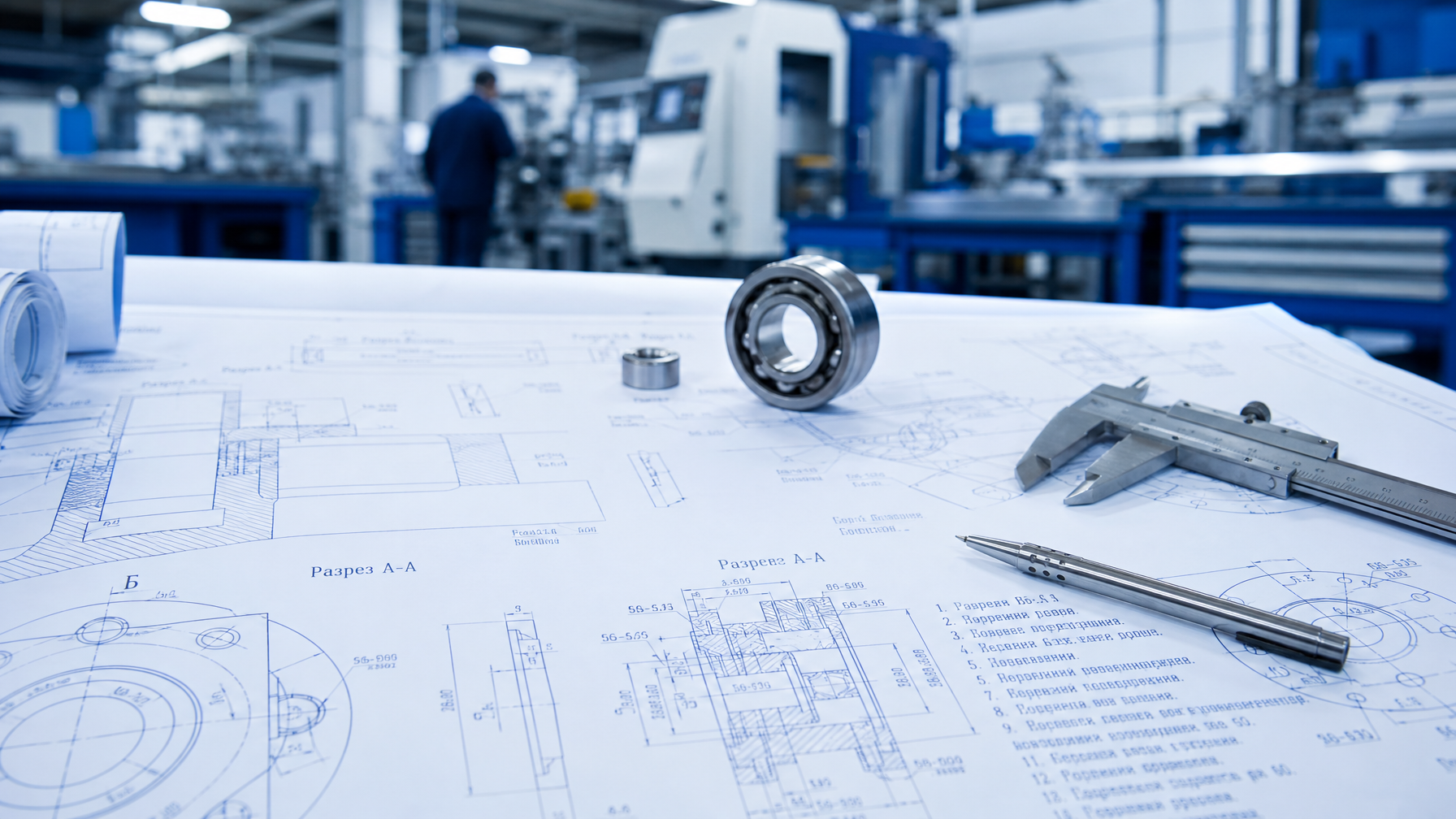
Technical drawings often include text annotations, part numbers, tolerances, and material specifications that require translation. The translator must understand engineering drawing conventions in both the source and target language.
Safety documentation
CE marking, GOST certification (Russia's national standard), and other regulatory compliance documentation requires translators who understand the regulatory frameworks in both the UK and the target market.
Tender and contract documentation
Businesses responding to Russian tenders or negotiating supply contracts need accurate translation of technical specifications, scope of works, and contractual terms. Errors in tender documents can disqualify a bid or create contractual ambiguity.
Maintenance and service documentation
Maintenance schedules, service procedures, and spare parts lists must use consistent terminology that matches the original equipment documentation. Inconsistent terminology between the original manual and the service documentation creates confusion for engineers and technicians.
The Terminology Problem in Russian Technical Translation
Terminology consistency is the most common quality issue in technical translation, and it is more acute in Russian than in many other languages because of the alphabet difference and the frequency of borrowed technical terms.
Consider a simple example. The English term "bearing" in a mechanical engineering context has a specific Russian equivalent (подшипник). A translator who is not familiar with mechanical engineering might translate it as the more generic term for "bearing" in a load-bearing sense, which has a different Russian word (несущий). In a user manual, this error would be confusing but correctable. In a safety instruction or a specification document, it could cause a serious operational problem.
The solution is a project glossary: an agreed list of source terms and their approved Russian equivalents, built before translation begins and applied consistently throughout the project. For businesses with ongoing technical translation needs, a maintained glossary across all projects ensures that the same terminology is used in every document, regardless of when it was produced.
At Global LTS we use MemoQ translation memory on all technical projects. This stores approved term pairs and applies them automatically, flagging any instance where a previously approved term is used differently. For large document sets, this both ensures consistency and reduces cost on repeated content.
How to Brief a Russian Technical Translation Project
A complete brief for a technical translation project includes:
Subject matter context. What does the equipment or product do? What industry does it operate in? Who is the end user: an engineer, a technician, an operator? This determines the level of technical language and the register of the translation.
Existing glossaries or terminology preferences. If you have previously translated documents, provide them. If you have a preferred Russian term for your product names, brand terminology, or proprietary processes, specify them upfront.
The full document set. Technical documentation often consists of multiple related documents: a main manual, a quick-start guide, a spare parts list, safety data sheets. Translating them together as a set ensures consistency. Translating them separately at different times, often with different suppliers, is the most common cause of terminology inconsistency.
Target audience. A manual for an end-user operator requires different language from a manual for a maintenance engineer. Both require different language from a specification document for a procurement team.
File format requirements. Russian text in a formatted document (InDesign, Word with specific layouts, or engineering drawing software) requires attention to text expansion. Russian text can run 10-15% longer than the English equivalent for the same content. This can affect layouts designed for English text lengths.
What to Look for in a Russian Technical Translation Supplier
Subject-matter expertise. Ask specifically whether the assigned translator has experience in your sector. A translator who covers all technical subjects is a generalist. For engineering and manufacturing content, a specialist with relevant industry background produces a better result.
ISO 17100 certification. This is the international standard for translation services. It requires a two-step process: translation by a qualified translator followed by revision by a second qualified linguist. For technical documents where accuracy is critical, this standard should be a baseline requirement, not a premium option.
Translation memory and glossary management. A supplier who does not use translation memory on technical projects cannot guarantee terminology consistency across a large document set or over time.
Experience with your file formats. Technical documents often exist in specialist formats. A supplier who can work with your source files directly, rather than requiring you to extract text manually, saves time and reduces formatting errors on delivery.
Global LTS provides Russian technical translation for UK manufacturers and engineering firms. Our technical translators have subject-matter expertise across mechanical engineering, manufacturing, industrial equipment, and related sectors. Every project uses MemoQ translation memory and follows our ISO 17100:2015 certified process.
Contact us for a free quote, or see our Russian translation services and technical translation pages for more information.