Certified German Translation in the UK: Documents, Requirements, and What to Expect
Key Takeaways
- Certified German translation is required for any official German-language document submitted to UK authorities, including UKVI, the Home Office, courts, HM Revenue & Customs, and UK universities.
- A certified translation includes a formal statement signed by the translator or translation agency attesting to the accuracy and completeness of the document.
- German-speaking countries (Germany, Austria, Switzerland) issue highly structured official documents. Translating them requires detailed knowledge of national administrative terminology.
- UK Visas and Immigration (UKVI) requires translations to be completed by a independent professional translator or agency. Self-translations, or translations by friends and family, are strictly rejected.
- German company registry documents (Handelsregisterauszug) and legal certificates carry complex statutory terms that require experienced legal translators.
Whether you are applying for a UK visa, establishing a UK subsidiary of a German company, submitting academic credentials, or resolving legal matters in a UK court, official documents issued in German must be translated into English and certified for official acceptance.
Table of Contents
ToggleThis guide details what constitutes a certified German translation in the UK, which documents commonly require certification, and how to ensure your submission is accepted without delays.
What Is a Certified German Translation?
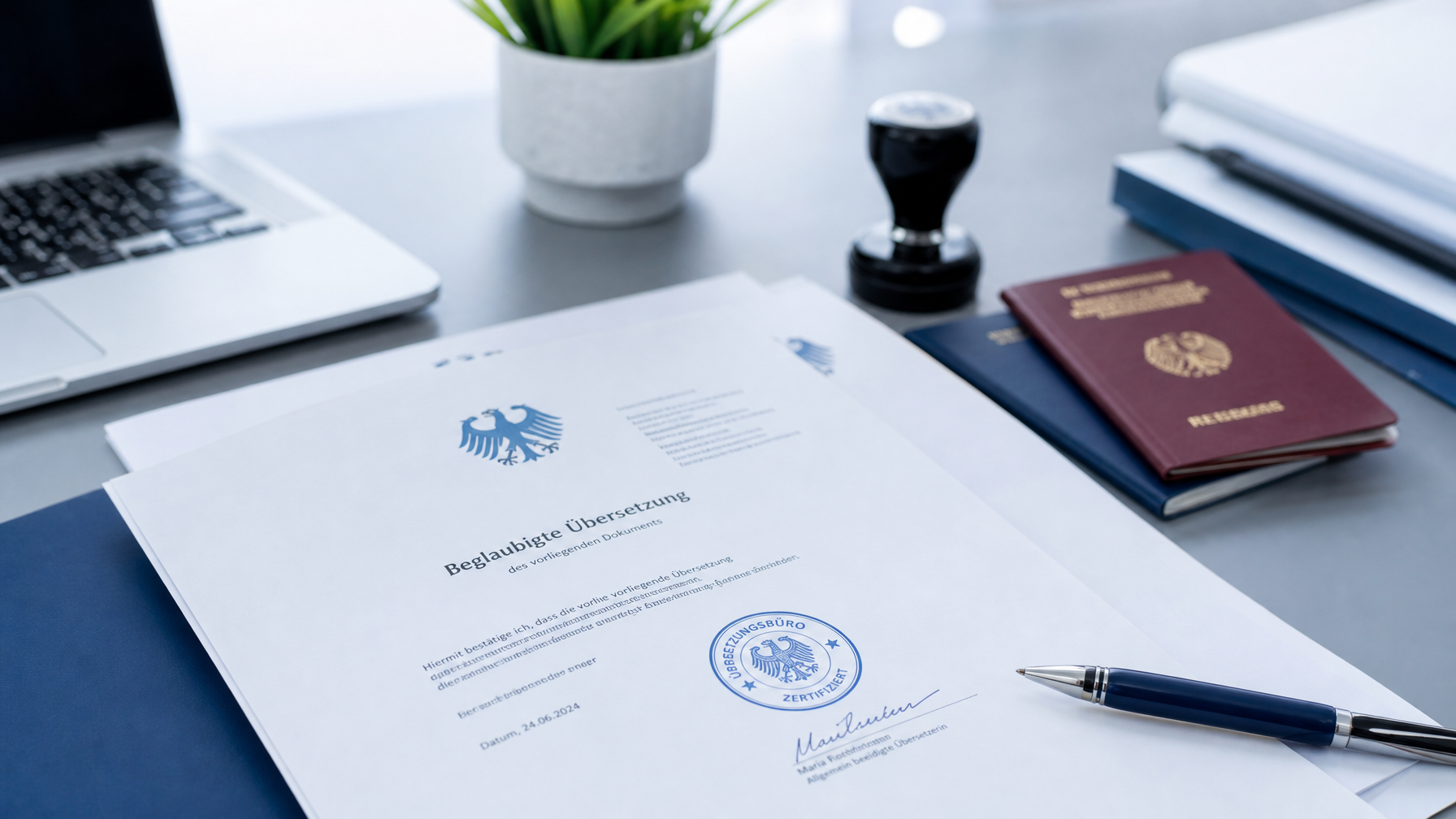
In the United Kingdom, a certified translation is an English translation accompanied by a formal written statement of accuracy signed by a professional linguist or an accredited translation agency.
The certification statement must specify:
- Confirmation that the translation is a true, complete, and accurate representation of the original document
- The full name and professional credentials of the translator or agency
- The agency or translator's contact details and office address
- The date of translation and an official stamp or seal
Unlike in Germany, Austria, or France. Where "sworn translators" (vereidigte Übersetzer) are officially registered with state courts. The UK system relies on professional certification issued by accredited translation companies adhering to quality standards such as ISO 17100:2015.
German Documents Commonly Requiring Certified Translation
1. Personal & Civil Status Documents
- Birth Certificates (Geburtsurkunde): Essential for UK visa, citizenship, and passport applications. Must include translations of all margin notes, registry office stamps, and seal impressions.
- Marriage Certificates (Eheurkunde / Heiratsurkunde): Required for spouse visas and legal proceedings.
- Divorce Decrees (Scheidungsurteil): Issued by family courts in Germany, Austria, or Switzerland for legal and matrimonial filings in the UK.
2. Corporate & Commercial Records
- Commercial Register Extracts (Handelsregisterauszug): Vital for registering UK branches of German firms, setting up corporate bank accounts, and completing due diligence.
- Articles of Association (Gesellschaftsvertrag / Satzung): Outlines corporate governance structures for cross-border investments.
- Certificates of Good Standing & Tax Clearance (Unbedenklichkeitsbescheinigung): Frequently requested by financial institutions and regulators.
3. Academic & Professional Credentials
- Diplomas & University Degrees (Diplomurkunde / Masterurkunde): Required for UK ENIC recognition, university admissions, and Skilled Worker visa sponsorship.
- Academic Transcripts (Notenübersicht / Zeugnis): Must translate exact module names and technical grading schemes accurately.
4. Legal & Judicial Documents
- Police Clearance Certificates (Führungszeugnis): Issued by the German Federal Office of Justice (Bundesamt für Justiz) or Austrian/Swiss authorities for DBS checks and immigration.
- Court Judgments & Powers of Attorney (Vollmacht): Used in probate, litigation, and international property transactions.
UKVI Requirements for German Translation
UK Visas and Immigration (UKVI) enforces strict guidelines for translating non-English supporting documents. Any German document submitted must include:
- A full, line-by-line translation covering every stamp, signature, and printed note
- The certification details from the professional translator or company
- Clear layout match so immigration case officers can cross-reference fields easily
Common Reasons for Rejection:
- Incomplete Translations: Omitting rubber stamps, back-page endorsements, or handwritten entries.
- Self-Translation: Translating your own or a family member's document, which is not permitted.
- Machine Translations: Unedited automated translations lack the certified statement and signature required by the Home Office.
Turnaround Times and Process
A standard certified translation for single-page civil documents (such as a birth certificate or Führungszeugnis) takes 1 to 2 working days. Multi-page commercial register extracts or court files take longer depending on complexity and page count. Express turnaround services are available for urgent visa deadlines.
Global LTS provides certified German translation services accepted by UKVI, the Home Office, HM Courts & Tribunals Service, and UK universities. Every certified translation includes an official statement of accuracy signed by our UK team under our ISO 17100:2015 certified workflow.
For a free quote, contact us with your scanned documents today, or visit our certified translation services page.