
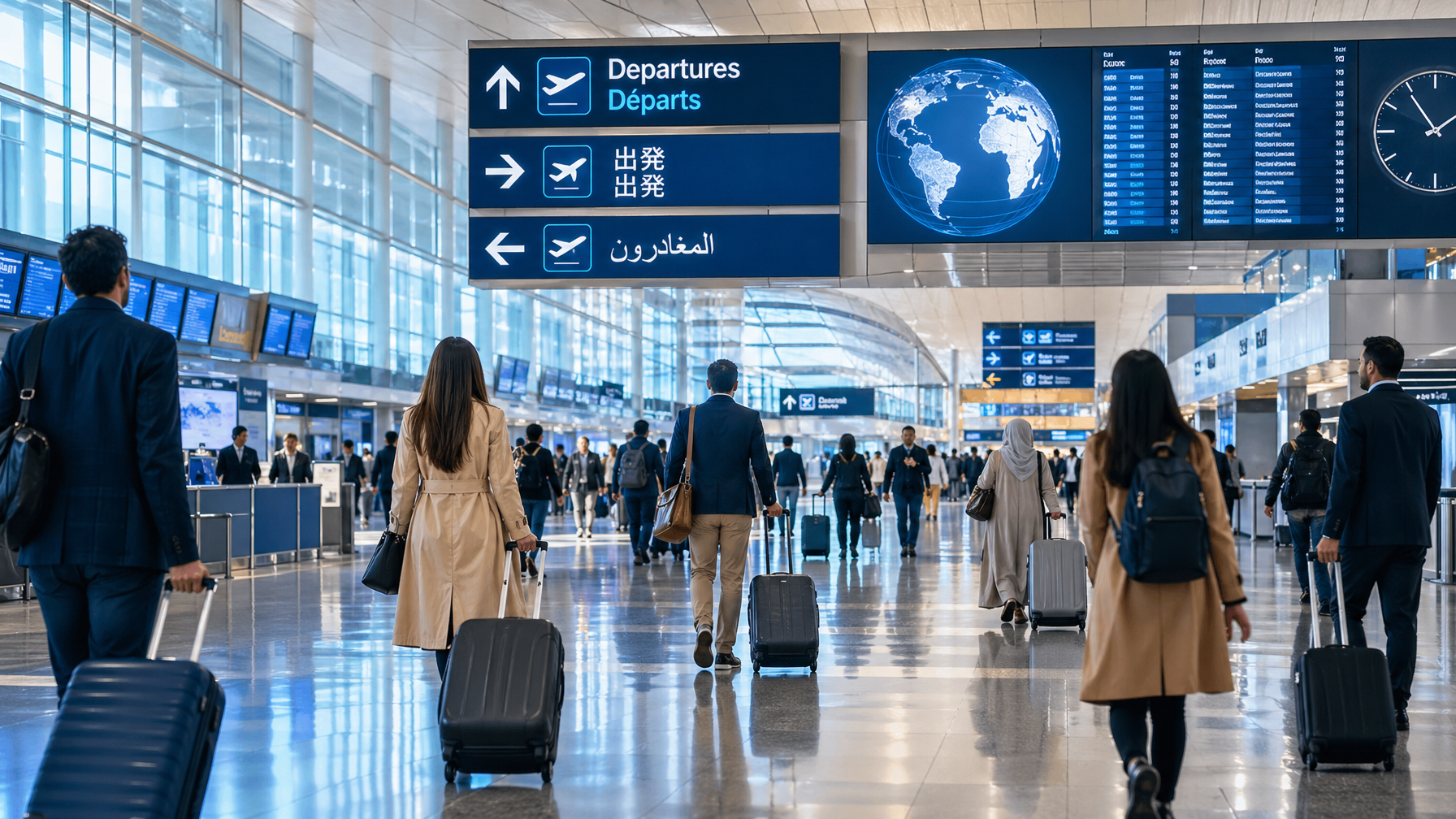
Tourism Translation Services: Why Your Travel Business Needs a Professional Agency
Key Takeaways
Tourism translation services convert travel and hospitality content – from hotel websites and booking platforms to menus, audio guides and safety notices – into the languages your international guests actually speak. Professional translators with sector experience go beyond word-for-word conversion to ensure cultural resonance, accurate terminology and consistent brand voice. Travel businesses that invest in quality tourism translation attract more international visitors, reduce complaints caused by miscommunication and protect their brand in every market they serve.
Table of Contents
ToggleWhat Are Tourism Translation Services?
Tourism translation is the specialist translation of content related to the travel, hospitality and leisure sectors. It covers everything a tourist interacts with before, during and after a trip: destination marketing materials, hotel websites, booking confirmation emails, restaurant menus, tour descriptions, printed trail guides, audio guides, travel insurance documents, visa information and customer service communications.
Unlike general translation, tourism translation requires deep cultural fluency alongside linguistic accuracy. A hotel menu translated literally from English into Mandarin may be grammatically correct but culturally jarring. A tour description written for a French audience needs a different tone and register from one aimed at German travellers. That distinction – between translating words and translating meaning – is what professional tourism translators deliver.
Why Does the Travel Industry Depend on Translation?
According to the UN World Tourism Organization, international tourism represents 7% of the world’s exports in goods and services. Travel businesses compete for guests from across the globe, and language is the first barrier to conversion.
Consider what happens at each stage of the customer journey without proper translation:
- Discovery: A German tourist searches for holiday accommodation and finds a competitor’s site in flawless German before finding yours in English only. They book with the competitor.
- Booking: A Japanese visitor attempts to complete an online reservation form in English. Unclear field labels lead to errors. The booking fails. They do not retry.
- On-site: A Chinese guest at a UK country hotel cannot read the breakfast menu or understand the fire exit instructions. The poor experience becomes a one-star review on a Chinese review platform you may not even monitor.
None of these scenarios require dramatic events. They reflect the daily reality of hospitality businesses that have not invested in multilingual communication.
Research consistently shows that consumers are significantly more likely to purchase from content in their own language. A widely cited Common Sense Advisory study found that 76% of online shoppers prefer to buy products with information in their native language, and 40% will not purchase from sites available only in other languages. For travel businesses, where trust and emotional appeal drive bookings, the case is even stronger.
What Types of Content Need Tourism Translation?
The range of content that benefits from professional tourism translation is wider than most operators initially expect.
Marketing and Promotional Content
Brochures, destination guides, campaign copy, press releases, social media content and promotional videos all require translation that preserves the persuasive and emotional quality of the original. This often involves transcreation – adapting the copy to achieve the same impact in the target language rather than a direct transfer. A punchy English strapline for a beach resort may translate into something flat in French; a skilled tourism translator rewrites it to land with the same force.
Websites and Booking Platforms
Your hotel website, booking engine, OTA profiles, customer portal and app all require accurate multilingual content. Poor translation on a booking form can lead to errors; poor translation on a product description page misrepresents what guests are paying for. Website translation for the tourism sector works hand in hand with SEO localisation – content must rank in the target language, not just read correctly.
On-Site Guest Communication
Menus, signage, room information packs, welcome letters, safety notices and printed maps all need accurate translation into the languages of your expected guest demographics. Errors here are visible to every guest and impossible to retract once printed.
Legal and Regulatory Documents
Travel insurance policies, terms and conditions, visa requirement guides and data protection notices carry legal weight. Mistranslations create liability. These documents require translators with both linguistic precision and awareness of jurisdiction-specific terminology.
Audio Guides and Multimedia
Tour operators and visitor attractions often require multilingual audio guides, subtitled video content and translated printed trail guides. Cultural understanding is especially critical here – guides that interpret local history and culture for an international audience need translators who understand both the source culture and how it will be received by the target audience.
What Makes Tourism Translation Different from General Translation?
Cultural Adaptation
A name for a local dish may mean nothing to a foreign visitor; a skilled tourism translator provides the description, cultural context and sometimes a brief explanatory note. Currency formats, date formats, units of measurement and address structures all require localisation alongside the text itself.
Tone and Register
Tourism content sells experiences. It uses aspirational, evocative language designed to create desire. A technically accurate translation that reads like a legal document fails at this job. Professional tourism translators understand how to match the emotional register of the original in the target language.
Sector Terminology
Hospitality has its own vocabulary: check-in and check-out procedures, room categories, board types (B&B, half board, all-inclusive), tour classifications and destination-specific terms. A translator without sector experience may misuse these terms in ways that confuse or alienate guests.
Speed and Volume
Travel businesses operate on seasonal cycles with marketing campaigns, rate changes and content refreshes running on tight deadlines. Tourism translation agencies with dedicated project management infrastructure handle high-volume, time-critical workloads – something a single freelance translator cannot reliably deliver.
Which Languages Should Your Travel Business Prioritise?
The answer depends on your guest demographics. Rather than translating into every possible language, start with data: where do your current international visitors come from? What languages appear most in your online reviews? Which source markets do you want to grow over the next three to five years?
For most UK tourism businesses, European languages – French, German, Spanish, Italian and Dutch – represent the highest-volume opportunity alongside Mandarin and Japanese for long-haul guests. A professional agency will advise on prioritisation based on your market position and budget.
When entering new international markets, deciding what to translate first is a strategic decision as much as a logistical one. Your booking funnel, highest-traffic web pages and on-site safety content should always come first.
How to Choose a Tourism Translation Agency
Sector Experience
Ask for examples of previous tourism, travel or hospitality translation projects. A track record in the sector is more reliable than a general claim to cover all industries.
Native-Speaker Translators
Translations into any language should be produced by translators who are native speakers of the target language and currently based in the target market. Language evolves constantly; a native speaker living in the country brings current colloquial usage that a non-resident translator may not have.
Cultural Competence
The agency should articulate how they handle cultural adaptation, not just linguistic transfer. Ask how they would approach a concept that exists in English but has no equivalent in the target language.
DTP and Formatting Capability
For brochures, menus and printed materials, translation must be followed by desktop publishing in the target language. Some languages (Arabic, Hebrew, Chinese) require right-to-left layout or character-based typesetting. A full-service agency handles this internally rather than leaving you to manage it separately.
Quality Assurance Process
A reputable agency follows a structured review workflow: translation by a subject-specialist linguist, editing by a second translator, and proofreading before delivery. Ask specifically about their QA process before signing a contract.
Common Mistakes Travel Businesses Make with Translation
Using machine translation for guest-facing content. Machine translation tools have improved significantly but still produce errors, particularly with idiomatic expressions, cultural references and sector-specific terminology. A menu translated by a machine may be technically readable but still generate confusion or complaints.
Translating once and forgetting. Travel content evolves constantly. Pricing changes, new services are added, and safety regulations update. A translation that was accurate when produced becomes a liability if not maintained. Build translation into your content update workflow, not as a one-time project.
Choosing an agency on price alone. The cheapest translation is rarely the most accurate or culturally appropriate. For guest-facing content in a sector where brand experience is everything, the cost of a poor translation – in complaints, negative reviews and lost repeat bookings – far outweighs the saving on the original fee.
Overlooking right-to-left languages. If your guest demographic includes Arabic or Hebrew speakers, your design team and translation agency need to work together on layout from the outset. Right-to-left text placed in a left-to-right template is not a minor formatting issue – it breaks the reading experience entirely.
How Global LTS Supports the Tourism and Hospitality Sector
Global Language Translation Services works with tourism translators who are native speakers with active sector knowledge, covering over 120 languages including all major European languages, Mandarin, Japanese and Arabic.
We handle everything from one-page menu translations to full multilingual website localisation projects, providing translation, editing, proofreading and desktop publishing as a single managed service. Our project management team understands travel industry timelines and can handle time-critical content without compromising on accuracy.
Contact our team for a free quote on your next tourism translation project.
Conclusion
Tourism translation services are not an optional extra for travel businesses with international ambitions – they are the foundation of effective communication with global guests. The choice between professional translation and the alternatives (machine translation, bilingual staff, or doing without) is ultimately a choice about how seriously you take the guest experience. For any travel business competing for international visitors, that choice has real commercial consequences.