
Translating for the Chinese Market: Regulatory, E-Commerce and Localisation Requirements
Key Takeaways
- Entering the Chinese market requires more than translating existing English content into Chinese — regulatory approvals, platform-specific localisation, and cultural adaptation all involve translation work that differs significantly from standard business translation.
- Products in regulated categories (food, cosmetics, pharmaceuticals, medical devices, electronics) must comply with Chinese regulatory frameworks that require Simplified Chinese documentation — these are not optional and are enforced at import.
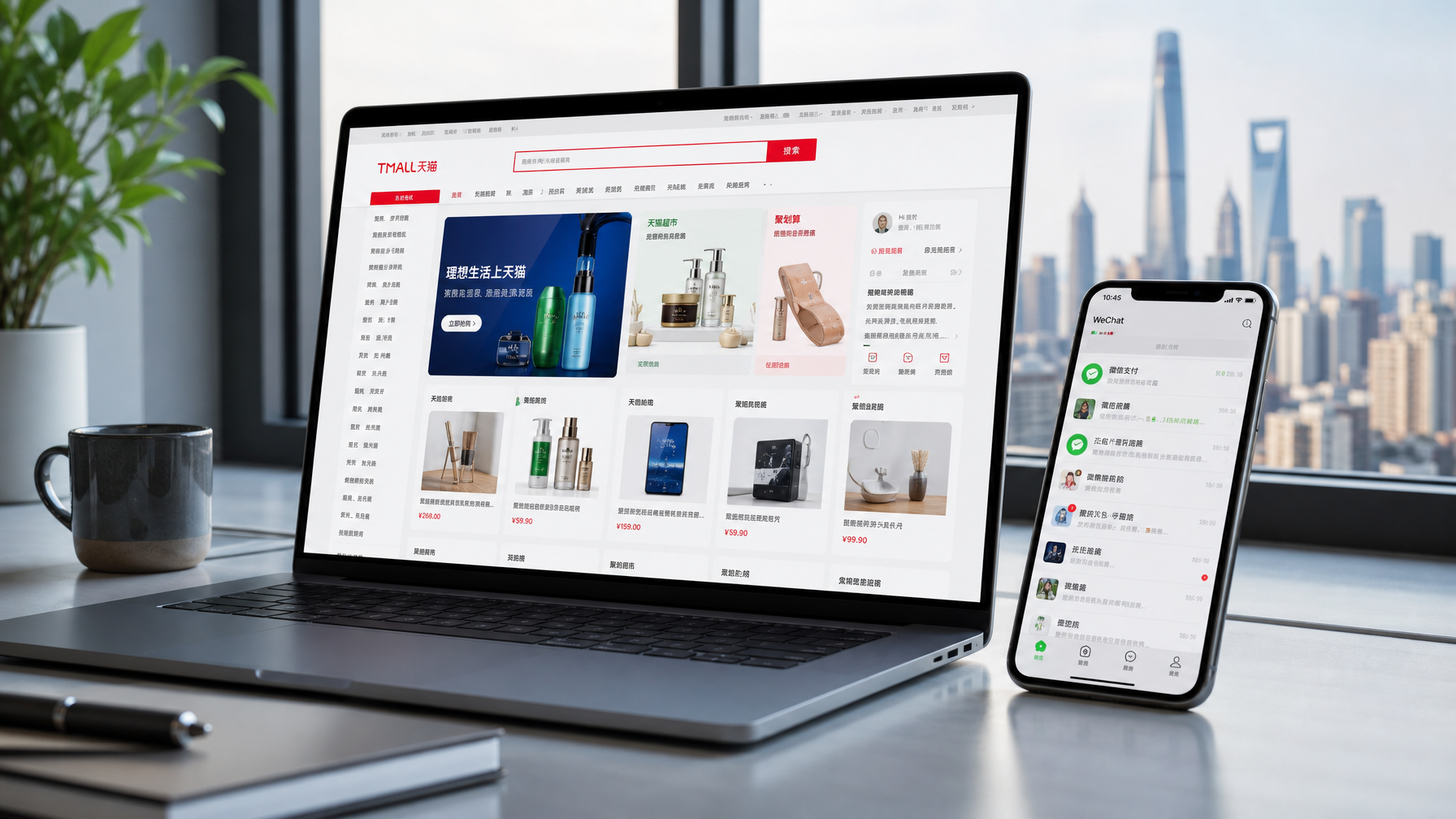
- Chinese e-commerce operates on platforms (Tmall, JD.com, Taobao, Pinduoduo) with their own content requirements, character limits, and product listing conventions that differ from Western equivalents and require platform-aware localisation.
- Chinese social media and digital marketing operates on entirely different platforms from Western markets — WeChat, Weibo, Douyin (TikTok's Chinese version), and Xiaohongshu each have distinct content formats, audience expectations, and regulatory requirements.
- Cultural adaptation matters as much as linguistic accuracy for consumer-facing content — Chinese consumer culture has distinct values, aesthetic preferences, and communication styles that affect how marketing copy should be written.
The Chinese market is one of the most significant commercial opportunities for UK businesses, and also one of the most demanding to enter correctly. Translation is central to market entry — not just translating a website or brochure, but navigating regulatory requirements, adapting content for Chinese digital platforms, and ensuring that consumer-facing communications are genuinely localised rather than simply translated. This guide covers the main requirements UK businesses need to understand.
Table of Contents
ToggleRegulatory Requirements for Products Entering China
Several product categories require regulatory approval and Chinese-language documentation before they can be imported and sold in mainland China.
Food and Health Products
Imported food products sold in China must carry Chinese-language labelling complying with GB 7718 (General Standard for the Labelling of Prepackaged Foods) and GB 28050 (National Standard for Nutrition Labelling of Prepackaged Foods). Requirements include:
- Product name, ingredients list, and allergen information in Chinese
- Nutritional information in the standardised Chinese format
- Net content, date markings, and storage conditions in Chinese
- Name and address of the Chinese importer or agent
- Country of origin
Health products (保健食品) require registration with the State Administration for Market Regulation (SAMR) before they can be marketed as health products in China. Registration requires Chinese-language technical documentation, clinical evidence where applicable, and labelling that complies with specific health product regulations.
Cosmetics: NMPA Registration
Imported cosmetics sold in China must be registered with or notified to the NMPA (National Medical Products Administration) under the Cosmetic Supervision and Administration Regulation (CSAR) introduced in 2021. Registration requires Chinese-language documentation including:
- Product formulation and ingredient details using INCI nomenclature with Chinese translations
- Safety assessment documentation
- Labelling compliant with Chinese cosmetics regulations
- Product efficacy claims that are substantiated and compliant with Chinese advertising law
Cosmetics labelling in China must carry specific mandatory information in Chinese — the NMPA registration number, the Chinese product name, ingredients list, and usage instructions — in addition to standard commercial information.
Medical Devices: NMPA Registration
Medical devices entering the Chinese market require NMPA registration, which is one of the most documentation-intensive regulatory processes for UK exporters. Registration requires Simplified Chinese translation of clinical data, technical documentation, instructions for use, labelling, and quality management documentation. NMPA-specific regulatory terminology must be used throughout — translators working on NMPA submissions require pharmaceutical and regulatory expertise, not just Chinese language skills.
Electronics: CCC Certification
Electronic and electrical products, telecommunications equipment, automotive parts, and safety equipment in specified categories require CCC (China Compulsory Certification) before they can be imported or sold in China. CCC documentation requirements are covered in more detail in our guide on Chinese technical translation.
E-Commerce: Tmall, JD.com and Chinese Platform Requirements
UK brands selling into China through e-commerce face a platform landscape that differs entirely from Western equivalents. The major platforms — Tmall (Alibaba's brand-focused marketplace), JD.com, Taobao, and Pinduoduo — each have their own product listing requirements, content formats, and character limits.
Product listings on Chinese e-commerce platforms require Simplified Chinese copy that follows platform-specific conventions. Product titles, descriptions, and attribute fields have character limits and formatting requirements that differ from Amazon or other Western platforms. Search optimisation on Chinese platforms uses Chinese keyword conventions that require native understanding, not translation of English keywords.
Product detail pages on Tmall and JD.com are typically long-form visual pages — banners, infographics, product photography with overlaid text, and detailed feature descriptions — that require both translation and design adaptation. The visual conventions of Chinese e-commerce product pages differ significantly from Western equivalents, with more visual content and longer page formats.
Cross-border e-commerce (CBEC) — where products are sold directly into China without full domestic registration — has its own product category permissions, tariff implications, and labelling requirements that affect translation scope.
Digital Marketing and Social Media in China
UK businesses marketing to Chinese consumers must operate on Chinese platforms — Western social media is not accessible in mainland China. The main Chinese platforms and their translation implications are:
WeChat (微信) — the dominant Chinese social and messaging platform, used for brand accounts (Official Accounts), customer service, mini-programmes (mini-apps within WeChat), and CRM. WeChat content requires careful localisation — the platform's conventions, content formats, and audience expectations differ significantly from Instagram or Facebook.
Weibo (微博) — China's microblogging platform, broadly comparable to Twitter but with longer content and extensive image use. Brand communications on Weibo require localised Chinese copy adapted to platform conventions.
Douyin (抖音) — the Chinese version of TikTok, operated as a separate app with a different content moderation regime and different trending content. Video content for Douyin requires Chinese audio (Mandarin) and Chinese subtitles, along with platform-specific content style.
Xiaohongshu (小红书, "Little Red Book") — a social commerce platform combining social media with product discovery, particularly influential in beauty, lifestyle, and consumer goods. Content on Xiaohongshu is written in an informal, personal style that requires native-fluency copywriting rather than straightforward translation.
For all Chinese social media platforms, content is subject to Chinese internet regulations — political sensitivity, advertising standards, and platform-specific rules all affect what can be published. Translation partners working on Chinese social media content must understand these constraints.
Cultural Localisation for Consumer Content
Effective Chinese market content requires cultural adaptation, not just translation. Key considerations for UK businesses:
Colour and visual associations — red is associated with good fortune and celebration in Chinese culture; white is associated with mourning. These associations affect packaging design, marketing imagery, and brand communications for the Chinese market.
Numerical associations — the number 4 (四, sì) sounds similar to the word for death (死, sǐ) and is considered unlucky. The number 8 (八, bā) is associated with prosperity. Product pricing, packaging quantities, and contact details are sometimes adjusted for Chinese market versions.
Celebrity and social proof — Chinese consumer culture places significant weight on social proof, Key Opinion Leaders (KOLs), and peer recommendations. Marketing copy for Chinese audiences often incorporates different credibility signals from Western equivalents.
Formality and communication style — Chinese business and consumer communications use different levels of formality and different rhetorical conventions from English equivalents. Directly translated marketing copy often reads as either too formal or insufficiently respectful to the Chinese reader.
Conclusion
Translating for the Chinese market is a multi-layered requirement — regulatory documentation, platform-specific e-commerce content, digital marketing for Chinese platforms, and culturally adapted consumer communications all have distinct translation and localisation needs.
Global LTS provides Chinese translation services for UK businesses entering Chinese markets, with native Simplified Chinese translators experienced across regulatory, technical, and consumer content. Contact us to discuss your Chinese market translation requirements.
For related reading, see our guides on Simplified vs Traditional Chinese and Chinese technical translation for manufacturing and engineering.