Certified Arabic Translation in the UK: Documents, UKVI Requirements, and What to Expect
Key Takeaways
- Certified Arabic translation is required for any Arabic-language document submitted to a UK official body, including UKVI, the Home Office, UK courts, and professional registration bodies.
- A certified translation includes a signed statement from the translator or agency confirming accuracy and completeness. It is not the same as a notarised translation.
- Arabic is one of the most commonly translated languages for UK immigration purposes. Countries including Saudi Arabia, Egypt, Jordan, Lebanon, Libya, Morocco, Iraq, and the UAE all issue documents in Arabic that require certified translation for UK official purposes.
- Arabic documents present specific challenges including right-to-left script, the use of Arabic-Indic numerals in some countries, and significant variation in document formats between issuing countries.
- UKVI requires translations to be produced by a professional. Family members and bilingual individuals are not acceptable, regardless of their Arabic language ability.
Arabic is among the most frequently translated languages for UK immigration, legal, and official purposes. The Arabic-speaking diaspora in the UK includes significant communities from Egypt, Lebanon, Libya, Morocco, Saudi Arabia, Syria, Jordan, Iraq, and the UAE, and Arabic-language documents arising from these communities regularly need certified translation for visa applications, court proceedings, professional registration, and commercial purposes.
Table of Contents
ToggleThis guide covers what certified Arabic translation means in the UK context, which documents are most commonly required, and what to expect from the process.
What Is a Certified Arabic Translation?
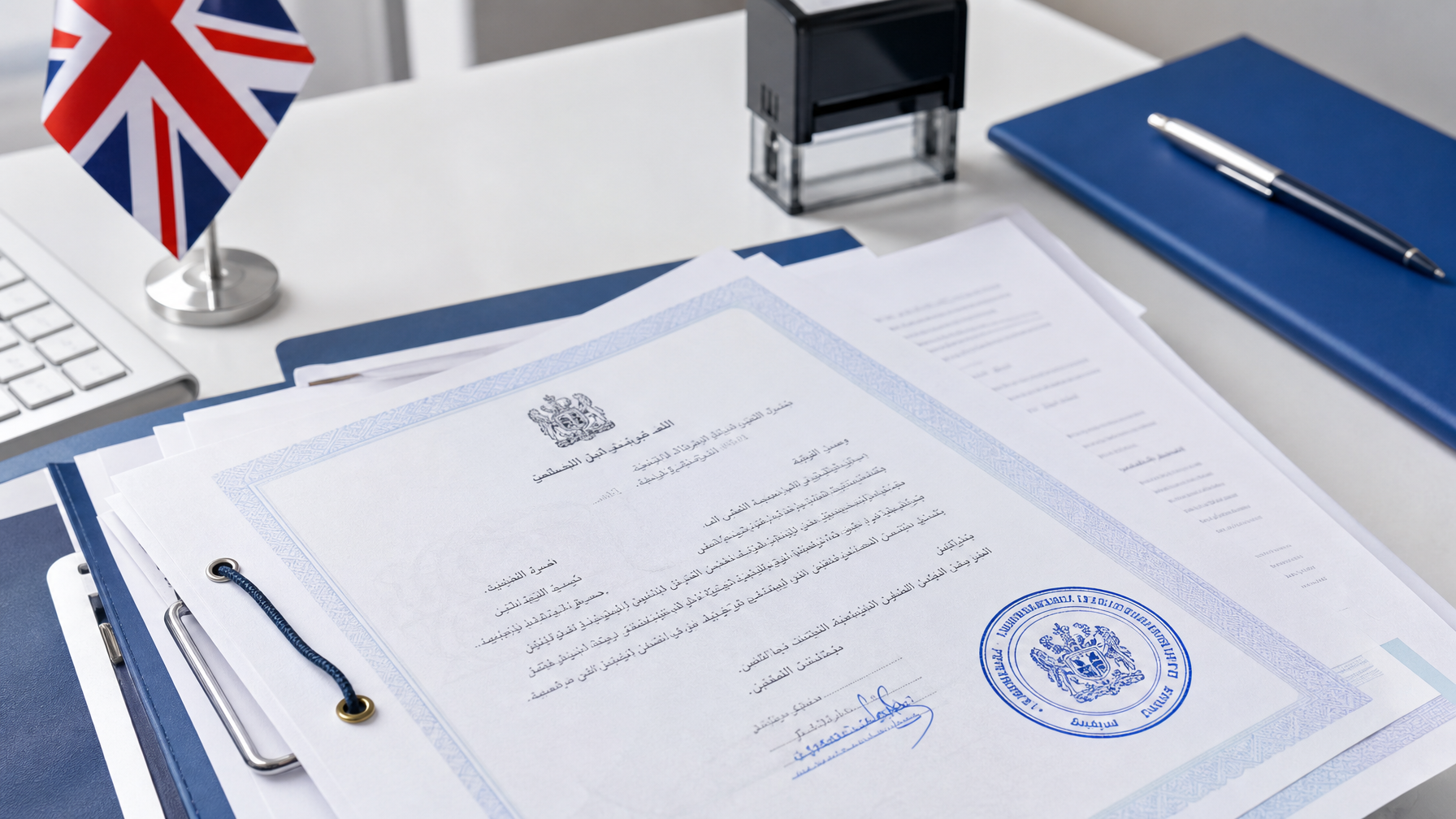
A certified translation is a translation accompanied by a signed statement from the translator or translation agency confirming that the translation is accurate, complete, and a true representation of the original document.
The certification statement must include:
- A complete translation of the entire document, including all stamps, seals, and official markings
- A statement that the translation is accurate and complete
- The translator's full name and contact details
- The date of the translation
Certified translation is not the same as notarised translation. Notarisation involves a notary public witnessing the translator's signature, which is required for some consular purposes but is not the standard requirement for UK immigration or official applications. When UKVI or a UK court asks for a "certified translation," the translator's own signed certification is what is required, unless the requesting body specifies otherwise.
Arabic Documents Commonly Requiring Certified Translation in the UK
Birth certificates (شهادة الميلاد)
Arabic birth certificate formats vary significantly by country. Saudi Arabian birth certificates issued by the Ministry of Interior, Egyptian birth certificates from the civil registry, Lebanese birth registrations, and Libyan civil documents all follow different formats and reference different issuing authorities. Each must be translated in full, including all administrative and registration information, stamps, and seals.
Marriage certificates (عقد الزواج / شهادة الزواج)
Marriage documentation also varies by country. In many Arabic-speaking countries, the marriage contract (عقد الزواج) is the primary document, which may be issued by a religious authority (Sharia court) or a civil registry, depending on the country and the circumstances. The type of marriage document and the issuing authority affect how it is handled for UK recognition purposes.
Divorce documents (وثيقة الطلاق)
Divorce documentation from Arabic-speaking countries varies significantly. Some countries issue civil divorce decrees; others issue religious (Sharia) divorce documents. UK courts and solicitors handling divorce proceedings involving Arabic-speaking parties frequently require certified translations of these documents.
Criminal records and police clearance certificates (صحيفة الحالة الجنائية)
Each Arabic-speaking country issues police clearance certificates through its own national authority. Saudi Arabia issues them through the Ministry of Interior, Egypt through the Ministry of Interior's Criminal Records Office, the UAE through the Federal Authority for Identity and Citizenship. These are required for visa applications, DBS-equivalent checks, and professional registration.
Academic transcripts and degrees (شهادة / كشف الدرجات)
Academic credentials from Arab universities are required for professional qualification recognition, skilled worker visa applications, and admission to UK institutions. Arabic academic documents use grading systems and qualification names that differ from the UK system and require a translator who understands the issuing country's education framework.
Company documents (وثيقة تأسيس الشركة)
Commercial registration documents, articles of association, and company certificates from Arab countries are required for UK commercial registrations, banking, and due diligence. These reference the specific commercial law framework of the issuing country.
Court documents and legal records
Judgments, powers of attorney (توكيل رسمي), and notarial deeds from Arabic-speaking countries require certified translation for UK court proceedings, property transactions, and inheritance matters.
UKVI Requirements for Arabic Translation
UK Visas and Immigration requires that any document submitted in Arabic must be accompanied by a full English translation. The translation must be:
- A complete translation of the entire document, including all stamps, official seals, and handwritten elements
- Certified as accurate by a professional translator or translation agency
- Accompanied by a signed statement with the translator's name and contact details
UKVI does not maintain an approved list of translators but requires that translations be produced by a professional. Machine-translated documents are not accepted.
Arabic-Specific Challenges in Certified Translation
Right-to-left script. Arabic is written right to left. Certified translations must accurately represent all text in the original, including text that appears in RTL layouts on stamps, certificates, and official headers.
Arabic-Indic numerals. Some Arabic-speaking countries use Arabic-Indic numerals (٠١٢٣٤٥٦٧٨٩) rather than the Western Arabic numerals (0123456789) that English speakers are familiar with. Dates, reference numbers, and registration numbers in these numerals must be accurately transcribed and translated.
Variation by issuing country. Arabic documents from different countries use different layouts, issuing authorities, and administrative terminology. A birth certificate from Saudi Arabia and a birth certificate from Morocco look entirely different and reference different legal and administrative frameworks. A translator familiar with the issuing country's document conventions produces a more accurate and reviewable translation.
Handwritten elements. Some older Arabic documents, or documents from countries with less standardised civil registration, include handwritten elements that require careful reading and accurate transcription. A translator who reads Arabic script fluently, including handwritten forms, is essential.
Missing vowel marks. Modern Standard Arabic is often written without short vowel diacritics (harakat). This is standard in written Arabic but means that some words can be ambiguous without context. An experienced translator resolves ambiguities through subject knowledge and context rather than guessing.
How Long Does Certified Arabic Translation Take?
A standard certified translation of a single document such as a birth certificate or marriage contract typically takes two to three working days. More complex documents, multi-page legal records, or documents requiring significant transcription of handwritten text take longer. Urgent turnaround is available on request.
Global LTS provides certified Arabic translation for UK visa applications, official submissions, court proceedings, and commercial purposes. Our translations are accepted by UKVI, the Home Office, HM Passport Office, and UK courts.
Each certified translation includes a signed statement of accuracy with the translator's name and contact details. Contact us with your documents for a free quote, or see our Arabic translation services and certified translation services pages for more information.