
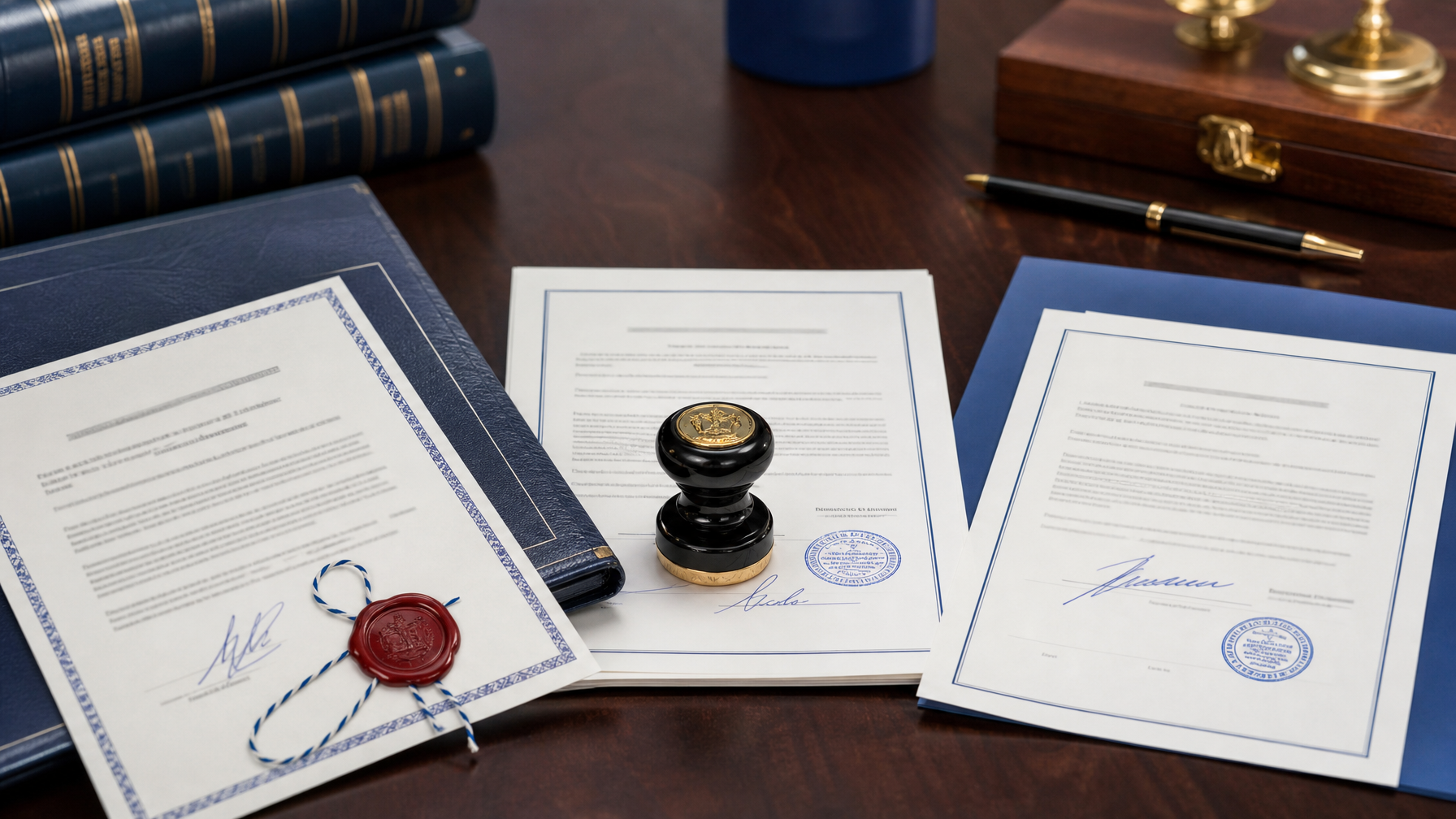
Certified vs Notarised vs Sworn Translation in the UK: What's the Difference?
Key Takeaways
- The UK translation system relies primarily on Certified Translations, which consist of an English translation accompanied by a formal signed statement of accuracy from a professional translator or agency.
- Notarised Translations involve a UK Public Notary verifying the identity and credentials of the translator or agency representative before witnessing their signature.
- Sworn Translations are an official legal category in civil law countries (like France, Spain, Germany, or Brazil) where linguists are officially sworn in by state courts. The UK legal system does not have a sworn translator system.
- Using the wrong level of certification can lead to document rejection by courts, government departments, or international consulates.
- An Apostille (Legalisation) is an official government certificate issued by the UK Foreign, Commonwealth & Development Office (FCDO) confirming that a notary or registrar’s signature is genuine.
When requesting official document translation in the UK, individuals and businesses are frequently asked for "certified", "notarised", "sworn", or "legalised" translations. These terms refer to distinct legal validation processes, and using the wrong one can result in rejected applications or unnecessary expense.
Table of Contents
ToggleThis guide explains the differences between certified, notarised, sworn, and apostilled translations, helping you select the exact level of validation required for your specific purpose.
1. Certified Translation (The Standard UK Requirement)
In the United Kingdom, a certified translation is the standard requirement for official documents submitted to government departments, universities, employers, and regulatory bodies.
What it involves:
- A full, accurate line-by-line translation of the source document into English (or another required language)
- A signed Certificate of Accuracy (statement of truth) on official company letterhead
- The professional agency’s registration details, contact information, date, and official stamp/seal
When you need a certified translation:
- UK Visas & Immigration (UKVI) & Home Office: Visa applications, Indefinite Leave to Remain (ILR), citizenship
- HM Passport Office: Applying for a UK passport with foreign birth or marriage certificates
- UK Universities & Colleges: Admissions, enrollment, and ENIC qualification equivalence checks
- Companies House & UK Banks: Registering foreign corporate documentation or opening bank accounts
- General Legal & Official Matters: Contracts, police records, or medical certificates submitted in the UK
2. Notarised Translation
A notarised translation adds an additional layer of formal authentication via an independent UK Public Notary.
What it involves:
- The professional translator or translation agency representative attends an appointment with a practicing Public Notary.
- The Notary verifies the representative's identity and checks their official credentials.
- The representative signs the statement of accuracy in the presence of the Notary.
- The Public Notary signs, stamps, and attaches their official seal to the certified translation bundle.
Note: The Public Notary verifies the signature and identity of the translator/agency, not the accuracy of the foreign text itself.
When you need a notarised translation:
- Court Proceedings: High Court, Family Court, or arbitration cases requiring sworn witness evidence
- International Corporate Transactions: Overseas company incorporations, cross-border acquisitions, or power of attorney declarations
- Pre-requisite for Legalisation: Required before the UK Foreign Office (FCDO) will issue an Apostille on a private document or translation
3. Sworn Translation
Many civil law jurisdictions. Such as Spain (Traductor Jurado), Germany (Vereidigter Übersetzer), France (Traducteur Assermenté), Poland, Italy, and Brazil. Maintain an official state register of Sworn Translators. These linguists take a formal oath before a regional or national court and hold an official court seal.
Crucial Distinction for the UK:
The United Kingdom does not have a system of court-sworn translators. There is no central UK government register of sworn linguists.
- If a foreign entity asks for a "Sworn Translation" in the UK: A standard UK certified translation or notarised translation produced by an accredited, ISO-certified UK agency (like Global LTS) is accepted as the official equivalent.
- If submitting documents to a foreign embassy/consulate in London: Always check whether the consulate accepts a UK notarised translation or requires a sworn translator registered with their home ministry.
4. Legalisation & Apostille (FCDO)
An Apostille is an official certificate issued by the UK Foreign, Commonwealth & Development Office (FCDO) under the 1961 Hague Convention.
What it involves:
- The FCDO inspects the signature and seal of the UK Public Notary or registrar on the document.
- Once verified, the FCDO attaches an official physical Apostille certificate to the back of the document package.
- This confirms internationally that the notary's seal and signature are genuine and legally recognized in all Hague Convention member states.
When you need an Apostille:
- Submitting UK-issued personal or business documents (e.g., UK birth certificates, Companies House certificates, or UK court orders) to foreign governments, courts, or embassies abroad.
Summary Comparison Table
| Certification Type | Issued / Verified By | Primary Use Cases | Accepted By UKVI? |
|---|---|---|---|
| Certified Translation | Accredited Translation Agency / Linguist | Visa applications, passports, UK university admission, HMRC | Yes (Standard) |
| Notarised Translation | UK Public Notary + Agency | Legal court proceedings, corporate due diligence, FCDO pre-check | Yes |
| Sworn Translation | Court-registered linguist (Civil Law countries) | Foreign government filings, overseas legal proceedings | N/A (Equivalent to Notarised/Certified in UK) |
| Apostille / Legalisation | UK Foreign Office (FCDO) | Submitting UK legal/translated documents to foreign governments | N/A (For overseas submission) |
Global LTS provides full certified, notarised, and legalised translation services. As an ISO 17100:2015 certified UK translation agency, our standard certified translations are fully accepted by UKVI, the Home Office, HM Courts & Tribunals Service, and UK universities.
Contact our expert team today for advice on the exact level of certification required for your documents, or visit our certified translation services page.