
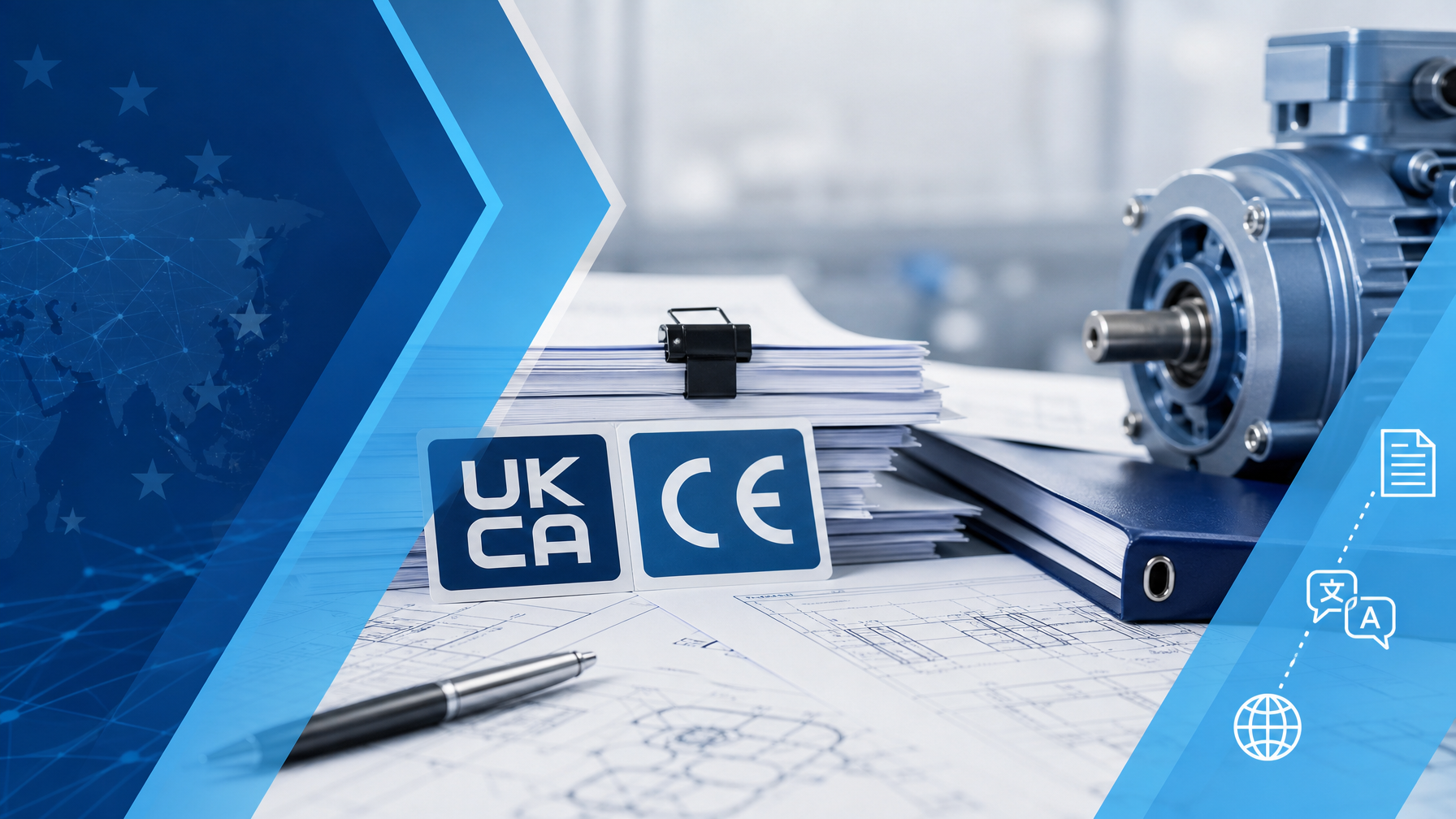
UKCA and CE Marking Documentation: What Needs Translating and Why
Key Takeaways
- UKCA marking applies to goods sold in Great Britain; CE marking still applies for Northern Ireland and the EU. Many manufacturers need documentation for both.
- The technical documentation behind a UKCA or CE declaration, not just the label, needs to be accurate and often needs translating for multi-market products.
- A Declaration of Conformity is a legal document. Errors in its translation carry compliance risk, not just a quality issue.
- Manufacturers selling into multiple markets typically need parallel documentation sets rather than one translated version reused everywhere.
If your engineering or manufacturing business sells products into the UK and the EU, you're likely dealing with two separate marking regimes rather than one, and each comes with its own documentation requirements that often need translation.
Table of Contents
ToggleWhat's the Difference Between UKCA and CE Marking?
UKCA (UK Conformity Assessed) marking applies to most goods sold in Great Britain (England, Scotland, and Wales) since the UK's exit from the EU single market. CE marking continues to apply for goods sold in the EU, and Northern Ireland uses the UKNI marking alongside CE in most cases. If your products are sold in both Great Britain and the EU, you generally need to maintain conformity documentation for both regimes, not one that covers both.
What Documentation Sits Behind a UKCA or CE Mark?
The mark itself is only the visible part. Behind it sits a body of technical documentation that manufacturers are legally required to maintain and, in some cases, provide on request:
- Declaration of Conformity — a formal statement that the product meets the relevant regulations
- Technical file — design specifications, risk assessments, test reports, and evidence of compliance
- User instructions and safety information — often required to be provided in the language of the country of sale
- Labelling and packaging text — safety warnings and usage instructions on the product itself
Which of These Documents Actually Need Translation?
This depends on where the product is sold, but as a general rule:
- User instructions and safety information almost always need translation into the language of each market you sell into. This isn't optional; it's typically a regulatory requirement, not just good practice.
- The Declaration of Conformity may need translation depending on the destination market's requirements, particularly for regulatory audits or customer requests.
- The technical file is usually kept in the manufacturer's working language but may need translation for specific components if requested by a market surveillance authority during an audit.
Why Does Getting This Translation Wrong Carry Real Risk?
Unlike marketing content, this documentation is legally binding. A translation error in a Declaration of Conformity, or safety instructions that don't accurately convey a hazard warning, isn't just a quality issue: it can create genuine liability if a product causes harm and the documentation is found to be inaccurate or incomplete in the language it was provided in.
Regulatory bodies and market surveillance authorities can and do request documentation during compliance checks, and inconsistent or inaccurate translations across different language versions of the same technical file raise red flags during those checks.
Do You Need Separate Documentation for UKCA and CE Markets?
In most cases, yes. Rather than treating this as one translation project reused across markets, it's worth treating UKCA-market documentation and CE-market documentation as related but separate deliverables, each translated and reviewed for the specific regulatory language expected in that market. Reusing a single translated document across both without checking market-specific terminology and requirements is a common shortcut that creates compliance gaps.
How Should Manufacturers Approach This Practically?
Build translation into your compliance documentation process from the start, rather than as an afterthought once the technical file is finalised. Working with translators who understand both the engineering content and the regulatory terminology conventions for UKCA and CE documentation reduces the risk of errors that could affect compliance.
At Global LTS, we translate UKCA and CE marking documentation, Declarations of Conformity, technical files, and product safety information across 32+ languages, with translators who have relevant engineering and regulatory subject-matter expertise. See our full engineering translation services, or read our related guide on translating CAD drawings and technical drawings. Contact us to discuss your compliance documentation.